Posts

Showing posts with the label China

What?!?

Image
State Owned Enterprises (SOEs) account for the majority of Chinese GDP, so the connection between the Communist Party and economic activity has always been close. But how does it make sense for China's richest person to be a member of the Communist Party? Jack Ma, China’s Richest Man, Belongs to the Communist Party. Of Course. Jack Ma, China’s richest man and the guiding force behind its biggest e-commerce company, belongs to an elite club of power brokers, 89 million strong: the Chinese Communist Party… It may sound contradictory that the wealthy Mr. Ma belongs to an organization that got its start calling for the empowerment of the proletariat. But Mr. Ma’s political affiliation came as no surprise to many Chinese and China watchers. Though it still publicly extols the principles of Karl Marx, the Chinese Communist Party largely abandoned collectivist doctrine in the post-Mao era, freeing private entrepreneurs to help build the world’s second-largest economy after the United Sta...

Update to Cultural Revolution study groups

Image
During the Great Proletarian Cultural Revolution in China, there were study groups in farm fields, factory floors, classrooms, and neighborhoods. The only study materials were Quotations from Chairman Mao Tse-tung , the "little red book." President Xi is updating the ideology study. Courseware on Xi thought launched Courseware on Xi Jinping Thought on Socialism with Chinese Characteristics for a New Era has been launched for free download on several websites including people.com.cn and xinhuanet.com. The courseware, developed by the Publicity Department of the Communist Party of China (CPC) Central Committee and the Ministry of Education (MOE), contains 30 subjects that focus on basic spirit, connotations and requirements of the thought. The courseware is aimed at helping officials and the public, especially college teachers and students, to learn, understand and grasp the thought. The CPC Central Committee Publicity Department, the MOE and the working committee of the centra...

Cultural Appropriation

Image

Communist, yes. Marxist, no.

Image
This is going to take some fancy explanation. Chinese campus crackdown on young Marxist activists expands in major cities At least 16 of 22 Chinese labour activists – many of them recent graduates from elite universities – who disappeared in five cities over the weekend were still missing early on Wednesday, as authorities widened their crackdown against emerging grass-roots activism led by young Marxists. Students at Peking University (PKU)… have been warned by the university over the past two days – in the presence of their parents and others who appeared to be plain-clothes police – to ignore the weekend purge. But the group, which gave the estimate of the numbers of activists still missing, has vowed to keep fighting for their freedom. The latest purge follows the earlier detention of about 50 activists after a labour rights protest that began in Shenzhen at the end of July… “Many students were told the weekend incident was a law enforcement action by relevant departments targetin...

Democratic centralism

Image
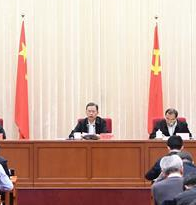
Supervision by whom? of whom? Can you identify a "job" in another political system that is analogous to supervision in China? Senior CPC official urges better supervision A senior Communist Party of China (CPC) official has called for better work from resident disciplinary supervisors. Zhao Leji, a member of the Standing Committee of the Political Bureau of the CPC Central Committee and head of the Central Commission for Discipline Inspection of the CPC, made the remarks at a televised work conference on supervision… Zhao Leji It is a distinctive Chinese practice to have disciplinary supervisors stationed at various entities of public office, Zhao said. Resident supervisors must enhance political supervision to ensure the Party organizations under their watch fulfill their political responsibilities of governance, Zhao said. Supervisors should focus on leading officials and strengthen regular supervision as they have the advantage of being around, he added. Zhao urged superv...

Cultural Revolution language again

Image
During the Cultural Revolution, there was a lot of talk about gender equity and the importance of women's roles. The language has reappeared. BTW, do you know why so many of President Xi's official positions are mentioned in the official Communist newspaper? Xi stresses upholding socialist path with Chinese characteristics for women's development President Xi Jinping on Friday stressed upholding the socialist path with Chinese characteristics for women's development and mobilizing women to make achievements. Xi, also general secretary of the Communist Party of China Central Committee and chairman of the Central Military Commission, made the remarks when meeting the new leadership of the All-China Women's Federation. Underlining the Party's leadership over the work of women's development, Xi said the Chinese dream of national rejuvenation should be the theme of the contemporary women's movement. Efforts should be made to promote gender equality, enable w...

Delay of "game"

Image
The delay of an annual meeting of Chinese leaders might be due to the U.S. election schedule. ‘The biggest story in Chinese politics right now’ – silence over Communist Party’s autumn meeting As China’s ruling Politburo wrapped up its October meeting on Wednesday, there was still no word on a key autumn meeting of the Communist Party, which according to party convention should be taking place soon… Analysts said the likely delay of the Central Committee meeting – expected to focus on mid to long-term economic policies – might suggest a lack of consensus among the Chinese leadership over how to battle the growing headwinds facing the world’s second-largest economy. The autumn plenum that comes a year after the party’s national congress is largely seen as the most important full meeting of the party’s roughly 400-strong political elite, who gather behind closed doors at least once a year… Many people are watching its slowing economy, faltering stock markets and the dispiriting retreat...

Integrate the civilian and military "worlds"

Image
Given the business ventures of the PLA and the civil projects taken on by military units, what integration is the government aiming for? Chinese vice premier urges deeper military-civilian integration Chinese Vice Premier Han Zheng on Monday attended a national symposium where plans were made to advance military-civilian integration. Han, a member of the Standing Committee of the Political Bureau of the Communist Party of China Central Committee and deputy head of the Central Commission for Integrated Military and Civilian Development, addressed the symposium… He said the building of major strategic projects should be used to advance the coordinated technological innovation between the military and civilian sectors, coordinate resource allocation to boost efficiency, and achieve the best performance. Han said Party committees and governments at all levels should view implementing the military-civilian integration as a major political responsibility, work hard to make new progress, enh...

Who could resist this headline?

Image
This headline from the South China Morning Post almost begged to included in this blog. Two Chinese cities and legions of police disguised as ‘dancing aunties’ and students on alert for presidential visit Amid the morning quiet, there were clear signs that someone important was about to arrive. In Futian, the city’s central business district, roads around the Museum of Contemporary Art and Planning Exhibition were blocked and residents wondered aloud about why they had to suddenly shut their windows. All businesses within two blocks of the museum – hosting an exhibition of the province’s role in country’s reform and opening up 40 years ago – were closed and the museum itself had been shut for a month in preparation for Xi’s visit. Pedestrians trying to go in for a closer look were shooed away by people who at first glance looked like students, grandpas and square dancing aunties but were all carrying the same kind of water bottles and mumbling, hooked up to earpieces. The presence of...

Meanwhile in China

Image
While Nigeria is considering a national birth control policy, China seems about to abandon its birth control policy China to scrap population targets, health official says China will not set a population target in the future and will give people more freedom around childbirth, a health official said, in the next step of a gradual loosening of decades of tight population-control policies… Wei Yunpeng, deputy director of the Population Monitoring and Family Development Division of the National Health Commission, was speaking at a conference hosted by his administration and the United Nations Population Fund. Wei’s comments are the latest sign that the government is moving to end decades of restrictive birth-control policies, fuelling speculation that China might announce removing birth limits at an upcoming meeting of the Communist Party Central Committee. Parliament removed “family planning” policies from the latest draft of a revised civil code scheduled for adoption in 2020, another...

Visual guide to ideology

Image
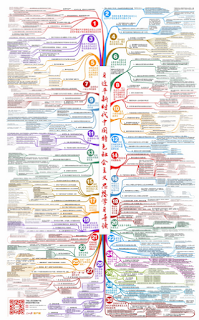
The Communist Party of China has published a "mind map" guide to President Xi's ideology for those who need a cheat sheet to stay out of political trouble. A simple guide to Xi Jinping Thought? Here’s how China’s official media tried to explain it When Xi Jinping outlined his political blueprint for the next 30 years at the Communist Party congress last year, it took him three and a half hours to articulate his vision for the country. Now, to mark the first anniversary of his speech, the party’s official mouthpiece has made a no less ambitious attempt to visualise the Chinese president’s doctrines. The result, published on the WeChat account of People’s Daily on Thursday, is a complex colour-coded “mind map” consisting of 30 separate elements, each broken down into multiple subsections that resemble the branches of a tree. Officially called “Xi Jinping Thought on Socialism with Chinese Characteristics for a New Era”, the doctrine is now enshrined in both state and party...

Renewal of an old theme

Image
Re-education was a popular theme during the Cultural Revolution in China. Will it work in Xinjiang now? China 'legalises' internment camps for million Uighurs China’s far north-western region of Xinjiang has retroactively legitimised the use of internment camps where up to one million Muslims are being held… Chinese authorities deny that the internment camps exist but say petty criminals are sent to vocational “training centres”. Former detainees say they were forced to denounce Islam and profess loyalty to the Communist party in what they describe as political indoctrination camps… “It’s a retrospective justification for the mass detainment of Uighurs, Kazakhs and other Muslim minorities in Xinjiang,” said James Leibold, a scholar of Chinese ethnic policies at Melbourne’s La Trobe University… The revisions, published on Tuesday, say government agencies at the county level and above “may establish occupational skills education and training centres, education transformation...

A 40-year plan

Image
Given how much Chinese President Xi pushes "his" reform and opening up ideas, it's good to remember that the idea was raised 40 years ago by Deng Xiaoping. Senior legislators hold study session on reform, opening up The Leading Party Members' Group of the National People's Congress (NPC) Standing Committee held a study session on China's reform and opening up over the past 40 years. Li Zhanshu, a member of the Standing Committee of the Political Bureau of the Communist Party of China (CPC) Central Committee, chairman of the NPC Standing Committee and secretary of its leading Party members' group, chaired and addressed the meeting held Monday and Tuesday. The meeting stressed studying and implementing Xi Jinping Thought on Socialism with Chinese Characteristics for a New Era, and a profound understanding of the major political judgement by Xi Jinping, general secretary of the CPC Central Committee, that reform and opening up is the key that has determined c...

How things work in China

Image
How does policy get made in China? Follow the assignment of tasks. Tasks set out for advancing law-based governance in China A total of 98 tasks in advancing law-based governance in China have been assigned to respective units, according to a statement made public recently. The statement came after a meeting on facilitating the tasks set by the Commission for Law-based Governance of the Communist Party of China (CPC) Central Committee. In legislative affairs, tasks include promoting legislation with a holistic approach to national security, protection of intellectual property rights and key reform areas. In law enforcement, improvements are expected in key sectors including food and drug, work safety, environment protection and public security. The tasks also include reforming civil litigation systems and building a public legal service system. Each task has been allocated to a responsible unit and given specific requirements on its monthly work plan and time table, according to the st...

Be careful what you wish for

Image
Chinese leaders must be nervous. The last time youthful protests were widespread, they ended only after the army killed hundreds of protesters in Tiananmen Square. The army moved in when workers began joining students in the protests. China’s Leaders Confront an Unlikely Foe: Ardent Young Communists They were exactly what China’s best universities were supposed to produce: young men and women steeped in the ideology of the Chinese Communist Party. They read Marx, Lenin and Mao and formed student groups to discuss the progress of socialism. They investigated the treatment of the campus proletariat, including janitors, cooks and construction workers. They volunteered to help struggling rural families and dutifully recited the slogans of President Xi Jinping. Then, after graduation, they attempted to put the party’s stated ideals into action, converging from across China last month on Huizhou, a city in the south, to organize labor unions at nearby factories and stage protests demanding g...

National Day in China

Image
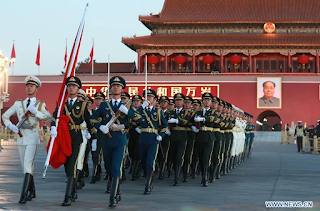
October 1, 1949 Flag-raising ceremony held at Tian'anmen Square to celebrate National Day A ceremony for raising the National Flag was held early Monday morning at the Tian'anmen Square in downtown Beijing to celebrate the 69th anniversary of the founding of the People's Republic of China (PRC). The Guard of Honor of the Chinese People's Liberation Army escorted the national flag to the square, while the military band played the national anthem. Color guard in Tian'anmen Square Around 145,000 people from across China gathered at the square to watch the ceremony. Tian'anmen Square witnessed the raising of the first PRC national flag on Oct. 1, 1949, marking a great new start for the Chinese people. Teaching Comparative blog entries are indexed. Use the search box to look for country names or concept labels attached to each entry. Just The Facts! 2nd edition is a concise guide to concepts, terminology, and examples that will appear on May's exam. Just The Fa...

Campaigning in China

Image
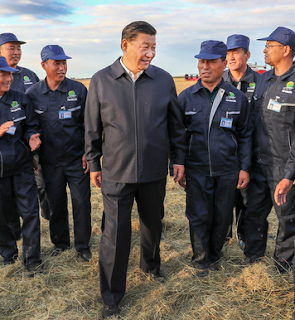
Even if most people in China don't remember Mao Zedong, President Xi does and wants to invoke the populist image of Mao. For Xi Jinping, Being a Man of the People Means Looking the Part He held up stalks of wheat and made small talk with farmers. He stood side by side with workers at an oil plant and spoke of building an “invincible” China. He called for China to become more “self-reliant” in the face of a trade dispute with the United States… It was a chance for Mr. Xi to put himself on a pedestal with Mao Zedong, to rekindle a populist image and to fire back at President Trump and “protectionist” policies. Xi in Heilongjiang Mr. Xi, who has been criticized for inspiring a personality cult with parallels to the Mao era, has taken note. In one image from his tour of a farm in Heilongjiang Province, Mr. Xi is shown under an idyllic blue sky, confidently stepping forward while an adoring crowd of farmers looks on. Famous 1950's poster of Mao and peasants The image is familiar. I...

Where, in China, does political power come from?

Image
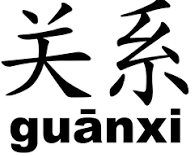
If a government office, like the Central Leading Group on Financial and Economic Affairs, has no public address, no website, and no external telephone number, does it exist? Does its leader wield political power? In the case of Yang Wiemin, former head of the Central Leading Group, the answer is yes. Another example of guanxi at work? Do Yang's remarks illuminate a political fault line in the Chinese leadership? Former top Chinese officials call for better protection of human rights and justice for all Former top Chinese finance officials have called for better enforcement of the law and protection of human rights in China at a top forum to mark the 40th anniversary of the country’s market reforms. Yang Addressing the elite Chinese Economists 50 Forum on Sunday, Yang Weimin, who stepped down earlier this year from the secretariat of the Communist Party’s top economic policy panel, said Chinese people now demanded better protection of human rights, rather than just pursuit of econo...

The "emperor" isn't far away

Image
One version of the old Chinese proverb is "Heaven is high and the emperor is far away." President Xi seems to fear that he is too far away. China cracks down on bureaucracy ‘paralysed by fear’. Officials can lose their jobs or be expelled from the party for failing to apply policies under new rules, as Beijing takes aim at bureaucratic inertia. After a relentless anti-corruption crusade spooked many officials into inaction, China’s ruling Communist Party is doubling down on efforts to rid the country’s vast bureaucracy of its inertia. Updated party rules released this week state that failing to implement policies from the top is now officially a breach of discipline that can see cadres lose their jobs or even be expelled from the party. Those who refuse to implement policy directives from the party’s Central Committee, who run their own agenda, or “are not resolute enough, cut corners or make accommodations” in applying them, will be subject to punishment under the new rule...
A great little 8-minute video explaining the concept of soft power.   China's 'soft power' in Kenya In Kenya, China is everywhere. And with Mandarin schools and massive infrastructure projects, China's trying to grow its "soft power" throughout Africa. But can China convince Africans to love it?